
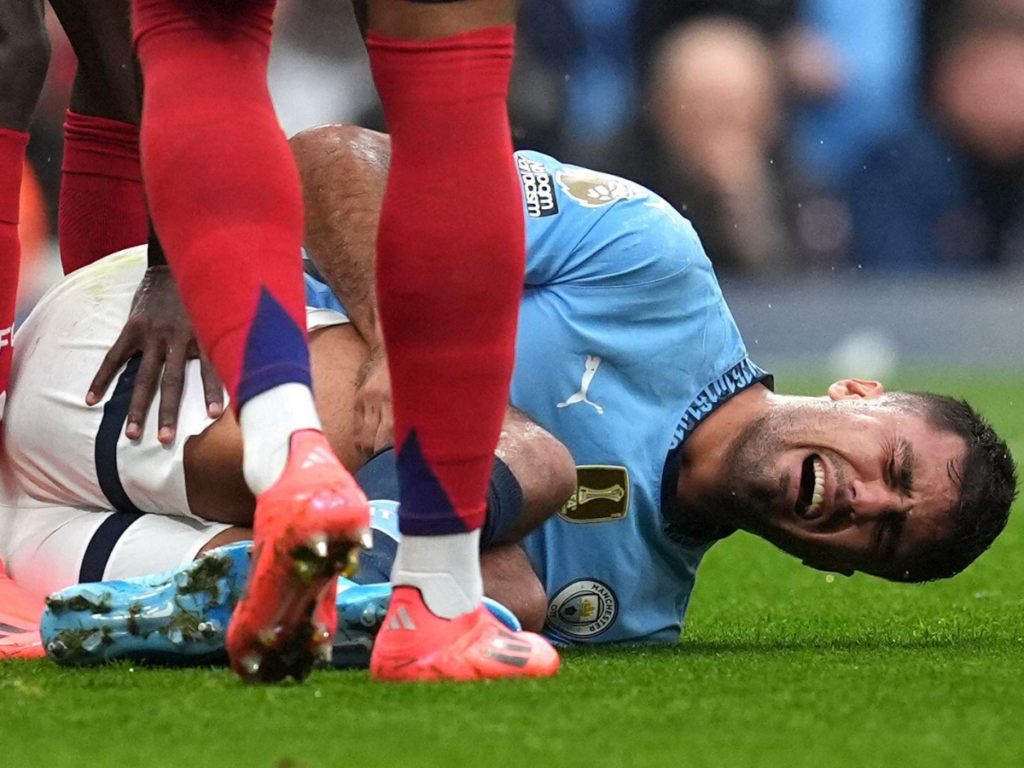
Artificial intelligence is changing how Premier League clubs manage player fitness. Modern systems study training loads, movement data and injury history within seconds. These tools help medical teams spot warning signs earlier. The technology now works alongside coaches, doctors and performance staff.
AI Turns Player Data Into Early Injury Signals
Machine learning is increasingly used to analyse large datasets across football, from player performance and injury risk to match outcomes. When football markets are assessed alongside statistical models, information viewed through 1xbet Myanmar can form one part of a broader comparison involving team form, performance indicators and match data. A similar analytical approach can also be seen within Premier League clubs, where player tracking and performance data are used to better understand fitness and workload.
Liverpool provides a clear example of this analytical approach. The club uses digital systems to collect daily player information. Players can report fatigue and physical feelings before training sessions. Staff then combine those answers with GPS and performance data.
Liverpool also employs dedicated data scientists within its football operation. Its tracking systems can record player and ball positions at 25 frames per second. That creates thousands of separate observations during a single match. AI can process these figures much faster than manual analysis.
Research Shows How Injury Prediction Can Work
Research reviewed again in 2026 gives a clearer picture of how machine learning can support injury-risk assessment in professional football. One frequently cited study examined data from 35 professional players at a Premier League club across several seasons. The researchers analysed data covering approximately five seasons, with around four and a half seasons used as the training period. The dataset contained 10,653 individual training observations.
The study also reported precision of approximately 13 percent for the neural network and 10 percent for XGBoost, showing why several performance measures are useful when assessing injury-prediction models. Recall indicates how many of the recorded injuries were identified, while precision provides additional context about how often injury alerts corresponded to an actual injury.
Together, these results suggest that AI models can provide useful signals when analysing injury risk, while also highlighting the challenges involved in translating statistical predictions into practical football decisions.
Artificial Intelligence Is Also Entering Football Predictions
AI has another role within modern football analytics. Researchers use machine learning to forecast match outcomes from large datasets, while information checked through a 1x Login page may sit alongside form, goals and other match statistics during a broader market review. These models can examine form, goals, expected goals and other match statistics. Some systems also include fatigue, weather and momentum information. One Premier League study tested several machine learning methods. The research combined match results with several performance indicators.
Ensemble methods helped combine the outputs of several models into a single prediction system. This approach can improve consistency across different datasets. More recent research published in 2026 has continued to test machine-learning methods for football forecasting, while also showing that more complex models do not always outperform simpler approaches across different datasets.
These findings show the growing connection between AI and football forecasting. They also show why prediction remains difficult despite advanced technology. Football contains many changing factors during every match. Injuries, tactics, form and individual performances can quickly change outcomes.
Betting research also uses similar machine learning techniques for match forecasting. Academic studies have tested neural networks against historical Premier League results. These studies focus on statistical prediction rather than guaranteed outcomes. AI therefore remains a research tool rather than a source of certainty.
What Data Does AI Study Inside Football Clubs?
AI needs several types of information before finding useful patterns. Training data forms one of the most important parts of this process. GPS systems measure how far players run during each session. They also record high-speed efforts and repeated accelerations.
Heart-rate information adds another layer to the physical picture. Previous injuries provide another important signal for prediction models. Clubs can also examine recovery between matches and training sessions. AI compares current figures with earlier personal records.
This creates an individual baseline instead of using one standard. Each player can receive a more specific fitness assessment. Important data points include:
AI Can Change Training Before Problems Appear
One potential advantage of machine-learning systems is their ability to identify changes in a player’s workload or physical profile before an injury occurs.
For example, a player’s sprint workload may suddenly rise above their usual range. A monitoring system could flag that change for the performance team, who can then consider it alongside the player’s recent schedule, recovery data and physical condition.
Staff may respond by adjusting training intensity or modifying a recovery plan. The important point is that AI can provide additional information for human decision-making, rather than replacing medical or performance expertise.
This can be particularly relevant during congested periods of the Premier League season, when players may have only a few days to recover between matches. Machine-learning systems can process large volumes of historical data quickly and highlight patterns that deserve further investigation.
The Next Step For AI In Premier League Football
Artificial intelligence will continue moving deeper into football operations. Injury prediction already connects medical data with training information. Performance analysis connects the same technology with tactical decisions. Clubs can now study several areas through wider data systems.
The next stage will likely involve larger datasets and faster analysis. Wearable devices can provide more information during everyday training. Cameras can also capture movement details that traditional statistics often miss. Better models could identify changes in running style or physical output.
Future models may improve injury-risk assessment, but reliable prediction still requires large datasets and further validation. AI can highlight potential warning signs, while medical and performance teams remain responsible for interpreting the data and making decisions.