
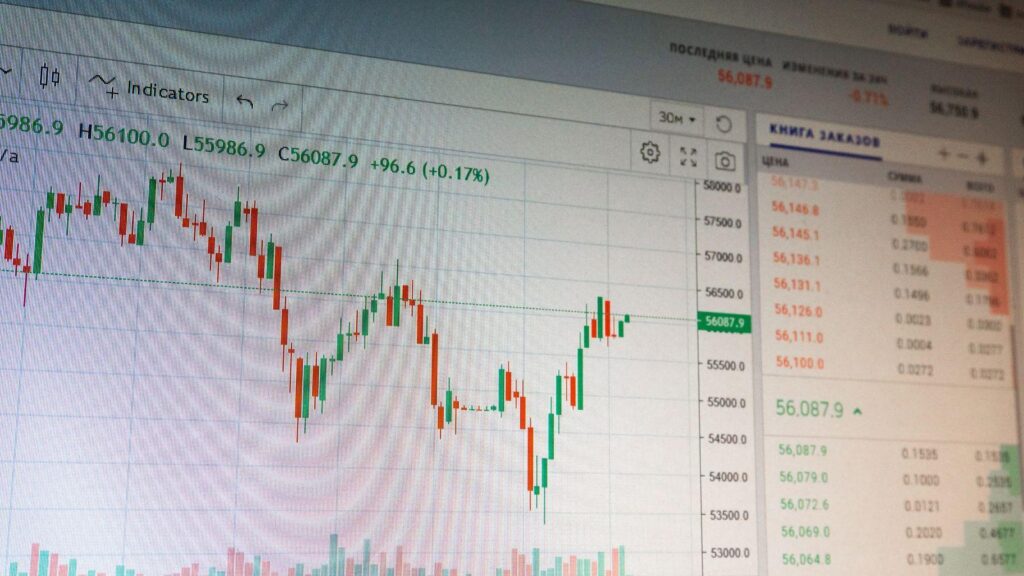
Compounding is often discussed in the context of long-term passive investing, where reinvested returns accumulate gradually over extended time horizons. Less frequently examined is how the same compounding principle applies, often in considerably more demanding ways, to active trading, where position sizing decisions and the magnitude of drawdowns can dramatically affect the long-term trajectory of compounded returns.
Understanding this relationship, between how positions are sized, how drawdowns affect the capital base available for future compounding, and the resulting long-term wealth trajectory, provides traders with a more complete framework for evaluating the true cost of risk-taking decisions over time.
Why Drawdowns Are Mathematically Asymmetric
A core mathematical reality of compounding is that losses and gains are not symmetrical in their effect on capital. A 50% loss requires a 100% gain merely to return to the original capital base, a relationship that becomes increasingly punishing as drawdown magnitude increases. This asymmetry means that avoiding large drawdowns is often more important to long-term compounded returns than capturing the largest possible individual gains.
This mathematical relationship has direct implications for position sizing, as larger position sizes increase the probability and potential magnitude of significant drawdowns. Traders focused primarily on maximising the size of individual winning trades, without adequate consideration of the corresponding downside scenario, often underestimate how severely a single substantial drawdown can impair long-term compounding.
The relationship becomes increasingly punishing at greater magnitudes: where a 20% loss requires a 25% gain to recover, a 50% loss requires a 100% gain, and an 80% loss requires a 400% gain simply to return to the original capital base, illustrating why drawdown severity, rather than drawdown frequency alone, deserves particular attention within any risk management framework.
Position Sizing as a Compounding Lever
Position sizing directly determines the range of possible outcomes for any individual trade, and by extension, the range of possible impacts on the overall capital base available for future compounding. Sizing positions too aggressively relative to account capital increases the risk that a string of losses, even if each individual loss is unsurprising in isolation, produces a drawdown severe enough to meaningfully impair the compounding trajectory going forward.
Conversely, sizing positions too conservatively, while reducing drawdown risk, can also limit the pace of compounding by constraining the impact of winning trades on overall capital growth. Identifying an appropriate position sizing approach therefore involves balancing the goal of meaningful capital growth against the mathematical reality that large drawdowns disproportionately damage long-term compounded outcomes.
The Compounding Cost of Volatility
Beyond individual drawdowns, the overall volatility of a trading approach affects long-term compounded returns in ways that simple average return figures can obscure. Two strategies with identical average returns but different volatility profiles will typically produce different compounded outcomes over time, with the higher-volatility strategy generally compounding to a lower terminal value despite an identical arithmetic average return.
This phenomenon, sometimes described through the distinction between arithmetic and geometric average returns, underscores why risk-adjusted performance measures, rather than raw average returns alone, provide a more accurate picture of likely long-term compounded outcomes for any given trading approach.
Recovery Time and the Cost of Capital Impairment
Beyond the mathematical relationship between loss size and required recovery gain, significant drawdowns impose a further cost in the form of time, as capital that could otherwise be compounding from a higher base instead spends an extended period simply recovering towards its prior peak. This recovery period represents a meaningful opportunity cost, particularly for traders with long time horizons where consistent compounding, rather than recovering from periodic severe setbacks, drives the majority of long-term wealth accumulation.
Modelling how different position sizing and risk management approaches affect both the probability and magnitude of drawdowns, and the corresponding recovery time required, offers a more complete picture of a strategy’s likely long-term compounding trajectory than simply examining average historical returns in isolation.
Applying These Principles in Practice
Translating these compounding principles into practical position sizing decisions typically involves explicitly modelling how a given sizing approach would have affected capital through historical periods of sustained losses, rather than focusing exclusively on average or best-case historical performance.
Those wanting to model how different growth rates and contribution patterns affect long-term compounded outcomes may find it useful to experiment with a compound interest calculator in the UK, which can help illustrate how sensitive long-term outcomes are to consistent growth versus periodic significant setbacks.
Conclusion
The relationship between position sizing, drawdowns, and long-term compounded returns represents one of the more mathematically significant, yet frequently underappreciated, aspects of active trading. Because losses and gains affect capital asymmetrically, avoiding severe drawdowns through disciplined position sizing often contributes more to long-term wealth creation than maximising the size of individual winning trades.
Traders who internalise this relationship, sizing positions with explicit consideration for how potential drawdowns would affect their long-term compounding trajectory, are better positioned to build sustainable, compounding returns over time than those who focus primarily on the magnitude of individual gains without equal consideration for the corresponding downside scenarios.