
I didn't pay much attention to proxies until I started working with tasks that depended on accessing websites from different locations. At first, the whole thing seemed pretty simple: pick a provider, connect, and get on with the job. Then came inconsistent connections, location restrictions, and the occasional moment when a page decided it had absolutely no interest in loading.
That's when I realised that choosing a proxy provider isn't just about finding the lowest price or the biggest advertised IP pool. The type of IP address matters, too. For anyone doing market research, checking local search results, managing multiple online projects, or collecting publicly available data, residential IPs can make a meaningful difference.
I wanted to understand which services were worth considering, particularly for residential proxy access. So I looked at what separates the main options and which details I'd actually care about before paying for a plan.
Residential IPs changed what I looked for
The first thing I learned was that not all proxies work in the same way.
Datacenter proxies use IP addresses associated with data centres. They're often attractive for their speed and pricing, but websites can sometimes identify traffic from these networks more easily. Residential proxies, on the other hand, use IP addresses associated with residential internet connections.
That distinction matters when a task depends on seeing region-specific content or accessing websites that scrutinise automated traffic. Residential IPs can make requests appear more like ordinary household connections, although they don't guarantee access or prevent every block.
Once I understood that, I stopped comparing providers as if they were all selling the same product. A cheap datacenter plan might be perfectly suitable for one project and a poor fit for another. Comparing it directly with a residential service without considering the intended use doesn't tell the whole story.
The providers I would put on the shortlist
I looked at a few familiar names, but I paid particular attention to residential IP availability, location options, pricing models, and how practical each service seemed for ongoing work.
GoProxies
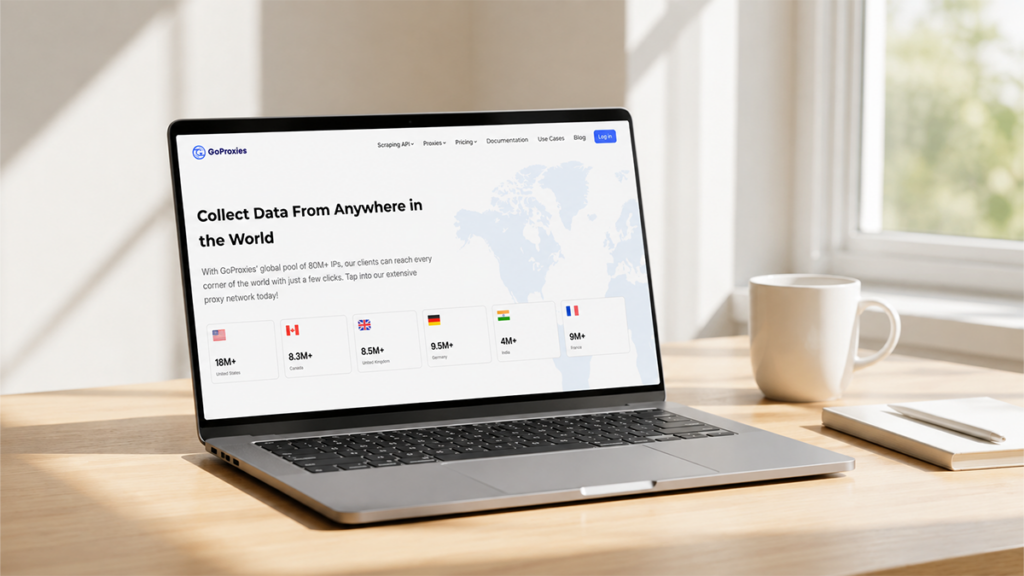
GoProxies caught my attention because residential proxy access was the main thing I wanted to evaluate. Rather than treating residential IPs as an optional extra to a general proxy package, I was interested in how well the service could fit workflows where IP type and geographic targeting matter.
For example, someone checking search results in several countries or researching how product listings appear to local users needs more than a connection that simply works. They need to consider where requests originate and whether the available sessions and locations suit the task.
I'd still test any plan against my actual workload before committing. I would check the available countries, authentication options, bandwidth costs, and session controls rather than assuming every feature fits every use case. But for a project centred on residential IPs, GoProxies would be one of the options I'd investigate early.
Bright Data
Bright Data is another name I'd consider, particularly for larger operations with demanding targeting and configuration requirements. Its broad proxy offering makes it relevant to businesses that need to build more elaborate data collection systems.
The trade-off is that a comprehensive platform can introduce more choices than a smaller project needs. I'd compare the actual plan costs, configuration requirements, and available residential features before deciding whether that extra flexibility would be useful or just another thing to manage.
Oxylabs
Oxylabs is also worth examining for business-oriented proxy infrastructure and data collection. It may appeal to teams that need residential access as part of a wider technical setup.
For me, the deciding factor would be how well the service fits the project's scale. Enterprise-focused features can be valuable, but an individual researcher or small team may have different priorities from a company running extensive data operations. Pricing and practical requirements need to be considered together.
Decodo
Decodo, previously known as Smartproxy, would make my comparison list as well. It's a familiar option for users exploring residential proxies without necessarily wanting to build an enterprise-level system from the beginning.
I'd pay attention to its current residential plans, targeting options, usage limits, and how straightforward it is to manage sessions. The important thing is to compare equivalent residential services rather than putting one provider's residential plan against another provider's datacenter offering.
What I checked before making a decision
I found it helpful to ignore the marketing language for a moment and focus on the details that affect everyday use.
First, I wanted to understand the pricing model. Some services charge based on traffic, while others may offer different packages or billing structures. A low starting price doesn't necessarily mean a lower overall cost if the project consumes substantial bandwidth.
Second, I considered geographic coverage. Having access to many IPs is less useful if the countries required for a project aren't available or the location targeting isn't precise enough.
Third, I looked at session management and authentication. Depending on the task, I might need a stable IP for a period or the ability to change connections between requests. Neither approach is automatically better; it depends on what the website and workflow require.
Finally, I considered reliability. Failed requests, unexpected interruptions, and complicated configuration can eat up the savings from a budget plan surprisingly quickly.
A useful proxy service should fit the work rather than force the work to fit its limitations. That sounds obvious, but it's easy to get distracted by impressive numbers on a pricing page.
My verdict: choose for the job, not the hype
I wouldn't name one provider as the universal winner because residential proxy requirements vary considerably. A business monitoring regional search results has different needs from a developer testing a website or a company collecting public market information at scale.
For my own shortlist, I'd start with GoProxies when residential IP access is central to the task, then compare it with Bright Data, Oxylabs, and Decodo based on the exact locations, features, and costs involved. The strongest choice is the one that delivers the required access and manageable operating costs without unnecessary complexity.
I'd also check each provider's current terms and usage rules before scaling up, especially for automated data collection. Residential IPs aren't a free pass to ignore website restrictions, and responsible request management still matters.
Have you tried any of these providers? I'd be interested to hear which residential proxy features made the biggest difference for you — pricing, location coverage, session controls, or simply having fewer connection problems.